

35mm film
35mm is a smaller format that has more frames per roll. It is a practical choice for everyday shooting, travel, and spontaneous moments. It comes in 24 or 36 exposure rolls.
What is the difference between the two?
35mm is a smaller format that has more frames per roll. It is a practical choice for everyday shooting, travel, and spontaneous moments. It comes in 24 or 36 exposure rolls.

120 film produces a much larger negative, giving images a refined level of detail and smooth tonal range. It is often chosen for portraits, landscapes, and intentional compositions.
Explore the differences between these two film-processing options.

The main process for developing all color negative film. We use Kodak pro C-41 chemicals for commercial use.

This is our black and white developer of choice. It produces consistent results across various black and white films. It is based on Kodak HC 110.

Our Film Scanner
The Fuji Frontier SP3000 is an industrial lab grade film scanner. It pulls details out of negative you never knew were there, and produces legendary tones. It is one of the main scanners film labs use across the world.
A balanced scan size for everyday viewing, sharing on social media, and small prints. The scan dimension is 12" on the long side.
This scan size has more detail for larger prints.The scan dimension is 18" on the long side.
Your digital files
We provide high-quality digital files for easy sharing, printing, and long-term storage.
A compact format that is easy to email, upload, and share online.
An uncompressed archival file format that provides 256 tonal values per color channel.
Like an 8 bit TIFF, but has 65,536 shades per color channel. This gives it amazing editing abilities. It is a large file.
TIFF is ideal for archiving, while JPEG is convenient for everyday sharing.
Choose the film handling service that best fits your project.

You only want digital files back.
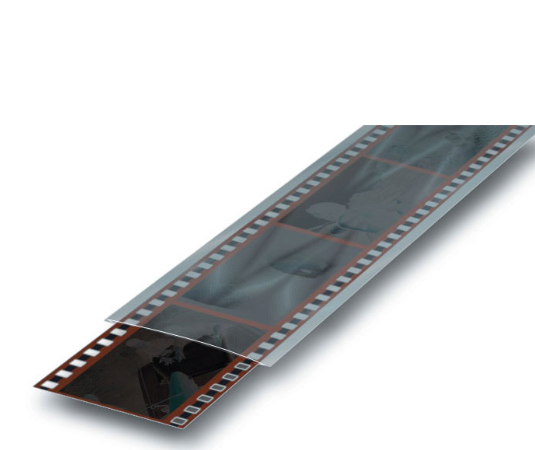
We will send your film back uncut in a Printfile archival sleeve. This is ideal if you scan at home or want to cut them yourself.
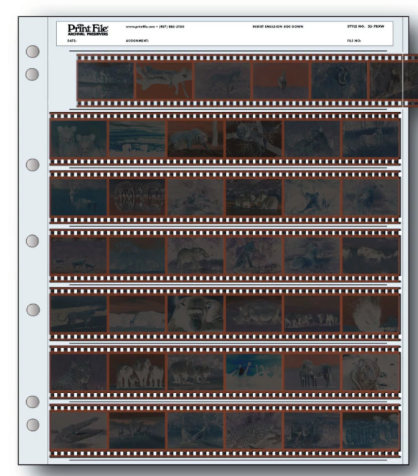
We will cut and sleeve your film in a Printfile sheet. This is great for archival storage.
Intentionally shooting not at box speed to achieve desired effects.
This is where the photographer intentionally under exposes a roll of film and it is developed for longer. This "increases" the films ISO rating. This is good for low light or high contrast.
This is where the photographer intentionally over exposes a roll of film and it is developed for less time. This decreases contrast.